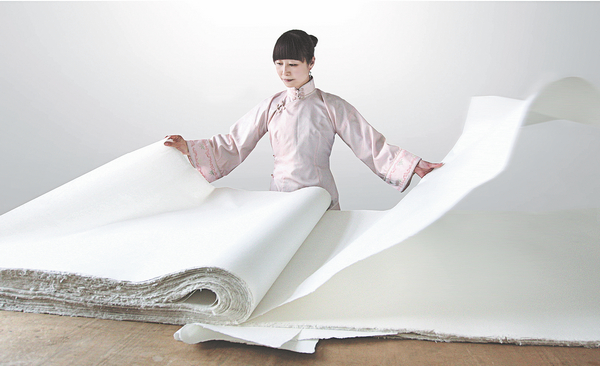
Cai Lun
Introduction
"Cai Lun (61/63–121)", with the courtesy name Jing Zhong, was a distinguished figure during the Eastern Han Dynasty (25-220). Renowned for his contributions to papermaking, Cai Lun served as a senior official in the imperial court, managing documents and participating in court politics. His primary claim to fame lies in his innovative development of the papermaking process, which led to the creation of what is known as Cai's Paper.
Early Life and Career
Cai Lun's early life in the Eastern Han Dynasty was marked by his service in the imperial court, where he rose to become a high-ranking official. His duties involved overseeing documents and participating in the administration of the empire. It was during his tenure overseeing the manufacturing industry that Cai Lun made his most significant contribution to history—his improvements to the papermaking process.
Invention of Paper
Cai Lun's papermaking innovation is one of the four great inventions of ancient China, alongside the compass, gunpowder, and printing. Prior to his improvements, writing materials were either expensive, heavy, or fragile, such as bamboo slips, silk, or parchment. Cai Lun's method involved using more readily available materials like tree bark, rags, wheat stalks, and other plant fibers, which were macerated and pressed into thin sheets. These improvements significantly reduced the cost and weight of writing materials, paving the way for more widespread literacy and record-keeping.
Impact and Legacy
The papermaking technique advanced by Cai Lun had profound implications, not only within China but globally as well. It was disseminated across the world via trade routes such as the Silk Road, reaching Central Asia and Western Europe, consequently making an indelible mark on the development of global civilizations. This innovation facilitated the spread of knowledge and culture, earning Cai Lun the titles of the "Ancestor of Papermaking" and the "God of Paper".
The legacy of Cai Lun and his papermaking innovations continues to influence various cultural expressions. His life and work have inspired numerous artistic and cultural endeavors, including Chinese dramas and performances that blend traditional Chinese opera with Western classical music. These artistic pieces often highlight Cai Lun's role in advancing cultural progress and his dramatic personal life at the imperial court.
Moreover, educational activities and museum exhibitions showcasing traditional papermaking techniques provide insight into Cai Lun's enduring influence, reflecting the ongoing appreciation for this fundamental innovation.








